News > Export News
Karaya Gum Uses and Pharmacology
(
Update:
30/09/2014
)
Toxicology
Karaya gum is generally recognized as safe.
Botany
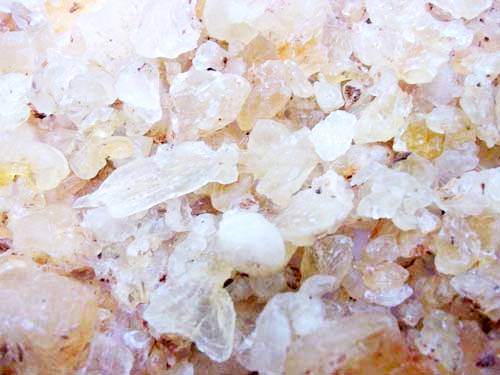
The majority of commercial karaya gum is obtained from Sterculia urens , which is a soft-wooded tree that grows to approximately 10 meters. It is native to India and Pakistan, where it is found on the dry, rocky hills and plateaus; it grows there almost exclusively, where it is cultivated for karaya production. 6 All parts of the tree exude a soft gum when injured. Karaya gum is produced by charring or scarring the tree trunk and removing a piece of bark or by drilling holes into the trunk. The gum seeps from the scars and is collected, washed, and dried. The gum is then graded. A mature tree may yield 1 to 5 kg of gum per season. The flowers bloom from February to March, and the tree bears a star-shaped fruit.
Karaya Gum Uses and Pharmacology
Karaya gum is not digested or absorbed systemically. It is essentially inert and is not associated with any pharmacologic activity. Karaya gum has a number of applications in the food industry.
Pharmaceutical uses
Medicinally, karaya gum is an effective bulk laxative as gum particles absorb water and swell to 60 to 100 times their original volume. The mechanism of action is an increase in the volume of the gut contents. Karaya gum should be taken with plenty of fluid and it may take a few days for effects to be noticeable. It also has been used as an adhesive for dental fixtures and ostomy equipment, and as a base for salicylic acid patches. Some preliminary studies suggest that gums may normalize blood sugar and plasma lipid levels, but this has not been thoroughly investigated.
The demulcent properties of the gum make it useful as an ingredient in lozenges to relieve sore throat. A protective coating of karaya gum applied to dentures has been shown to reduce bacterial adhesion by 98%.
Clinical trial data are lacking in support of the pharmaceutical applications of karaya gum.
The use of karaya gum as a carrier for drugs with differing solubilities in aqueous medium has been investigated.
Source: http://www.drugs.com/


